Comparison
Sensei vs MacBookBatteryMonitor
Sensei is a polished, general Mac optimization tool with a battery panel. MacBookBatteryMonitor is a battery-only tool. Here is where each one wins.
 vs
vs
Price
In US dollars.
MacBookBatteryMonitor85% lessSenseiSide by side
Finding the app that is draining the battery, and stopping it
Sensei's Monitor panel shows CPU, GPU, and memory usage, not power per app. MacBookBatteryMonitor ranks apps by watts, flags hidden workloads, and lets you cap, offload, or kill an app from the same row.
MacBookBatteryMonitorWinner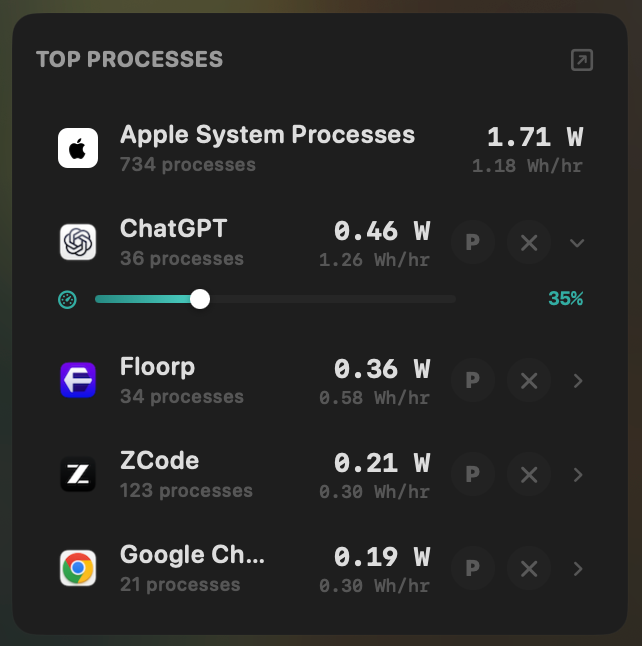
- Yes:Live per-app power draw · Process-level, real-time
- Yes:Hidden-workload detection · Docker, cloudflared, launchd
- Yes:Per-app CPU throttle · 10% to 100% slider
- Yes:E-core offload · Per-app toggle
- Yes:One-click kill · Runaway apps + subprocesses
Sensei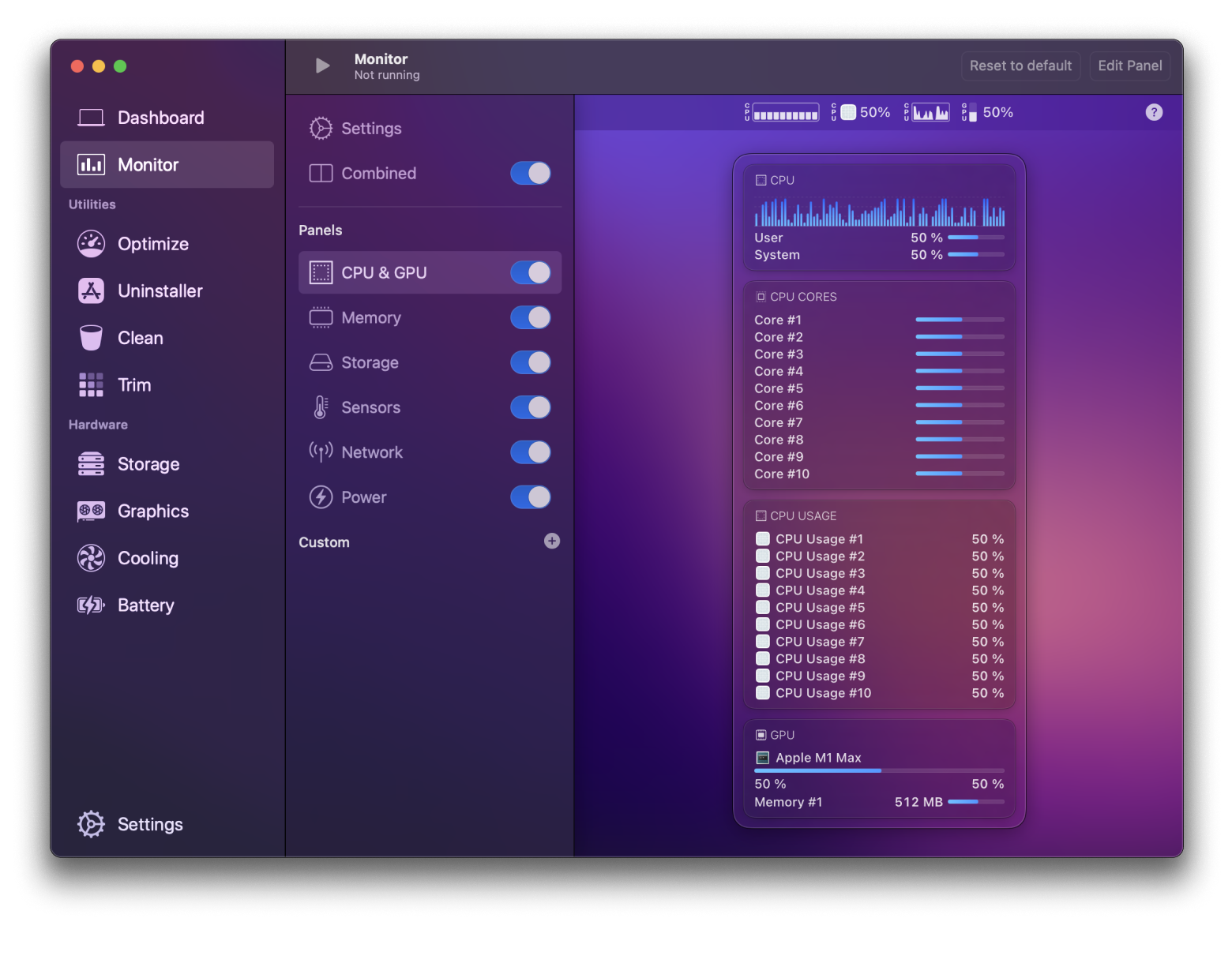
- No:Live per-app power draw
- No:Hidden-workload detection
- No:Per-app CPU throttle
- No:E-core offload
- No:One-click kill
Seeing where the power goes
Sensei has no system power readout. MacBookBatteryMonitor shows the live total in watts, split into CPU+GPU, RAM, display, and USB.
MacBookBatteryMonitorWinner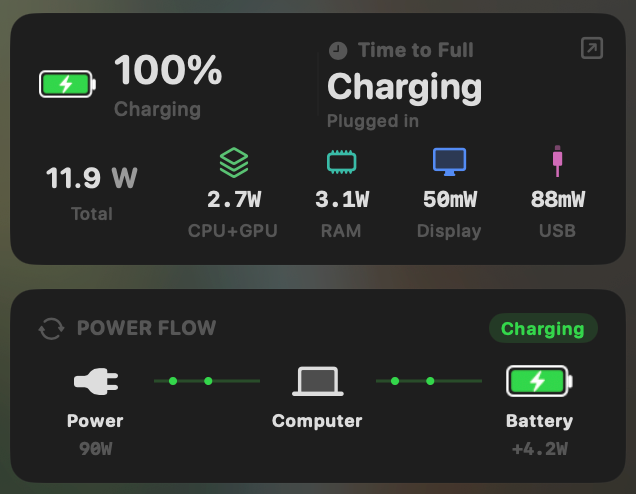
- Yes:System total power draw · Live, in watts
- Yes:Power breakdown by component · CPU / GPU / RAM / Display / USB
Sensei- No:System total power draw
- No:Power breakdown by component
Charge limit and Sailing Mode
Sensei has no charge control. MacBookBatteryMonitor sets a 50% to 100% charge limit over SMC, sails to it while plugged in, and switches on Low Power Mode by itself.
MacBookBatteryMonitorWinner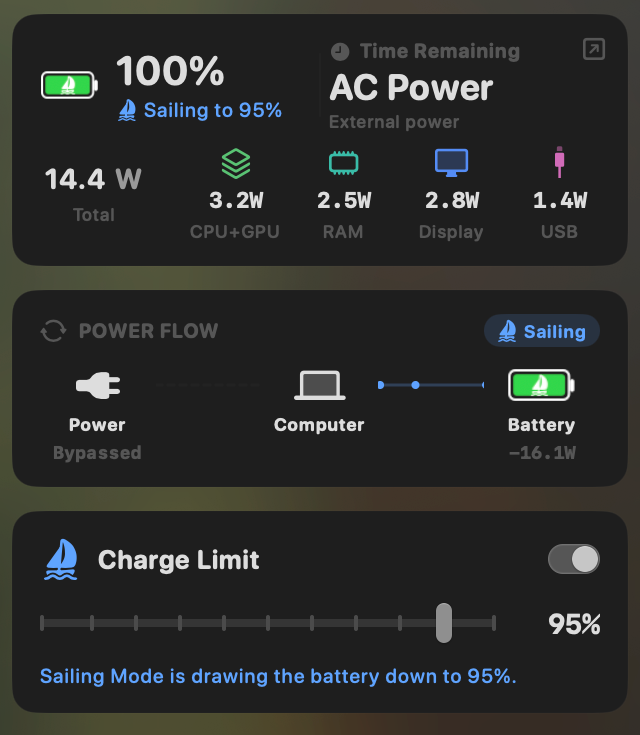
- Yes:Charge limit · 50% to 100% via SMC
- Yes:Sailing mode · Discharge while plugged in
- Yes:Low Power Mode automation · Auto below a threshold
Sensei- No:Charge limit
- No:Sailing mode
- No:Low Power Mode automation
Battery health
Both read health, cycle count, and temperature. Sensei presents health as one percentage on its battery panel. MacBookBatteryMonitor adds the design cycle limit, capacity, voltage, and a condition label.
MacBookBatteryMonitorDraw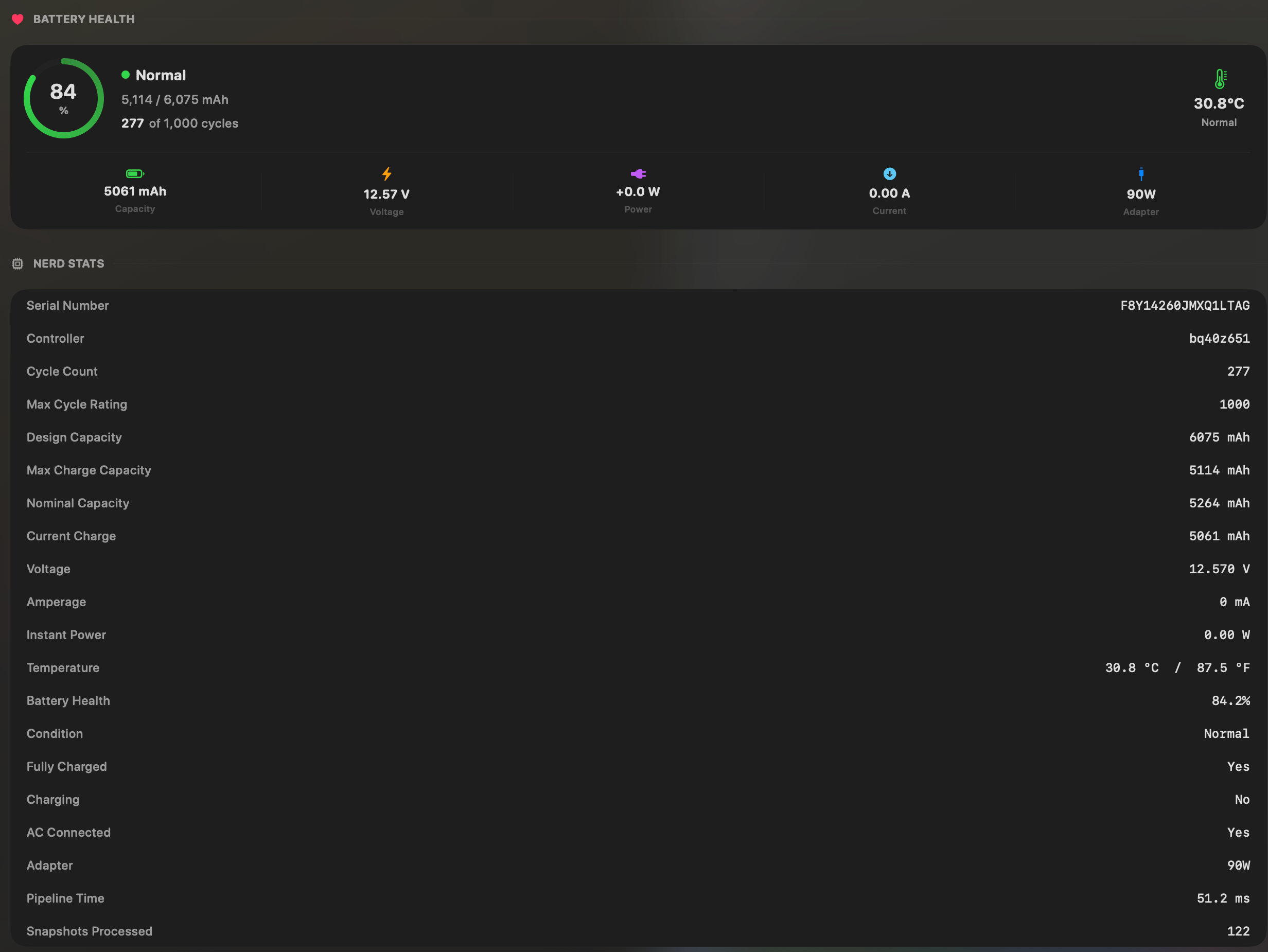
- Yes:Battery health % · Health % + condition label
- Yes:Cycle count · Cycles + design cycle count
- Yes:Battery temperature · °C / °F with status label
SenseiDraw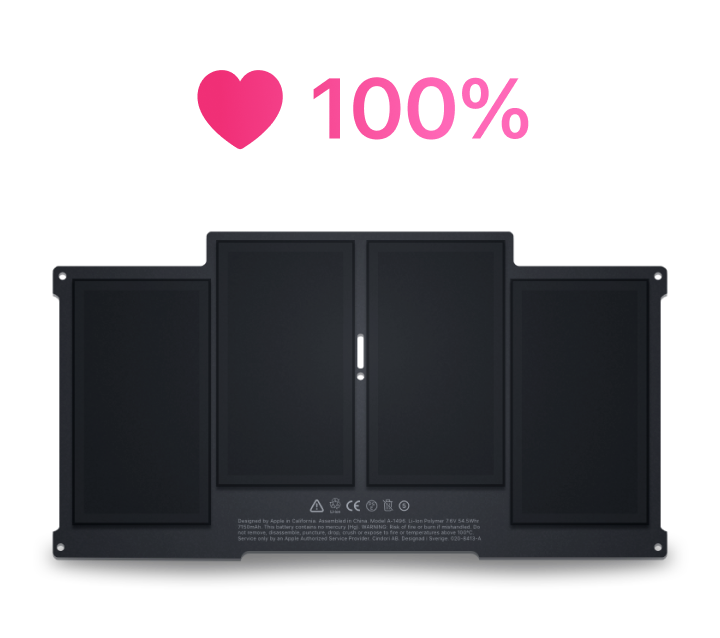
- Yes:Battery health %
- Yes:Cycle count
- Yes:Battery temperature
Menu bar and history
Sensei is a window with optional menu bar widgets. MacBookBatteryMonitor lives in the menu bar and keeps a battery level history from 1 hour to 7 days.
MacBookBatteryMonitorWinner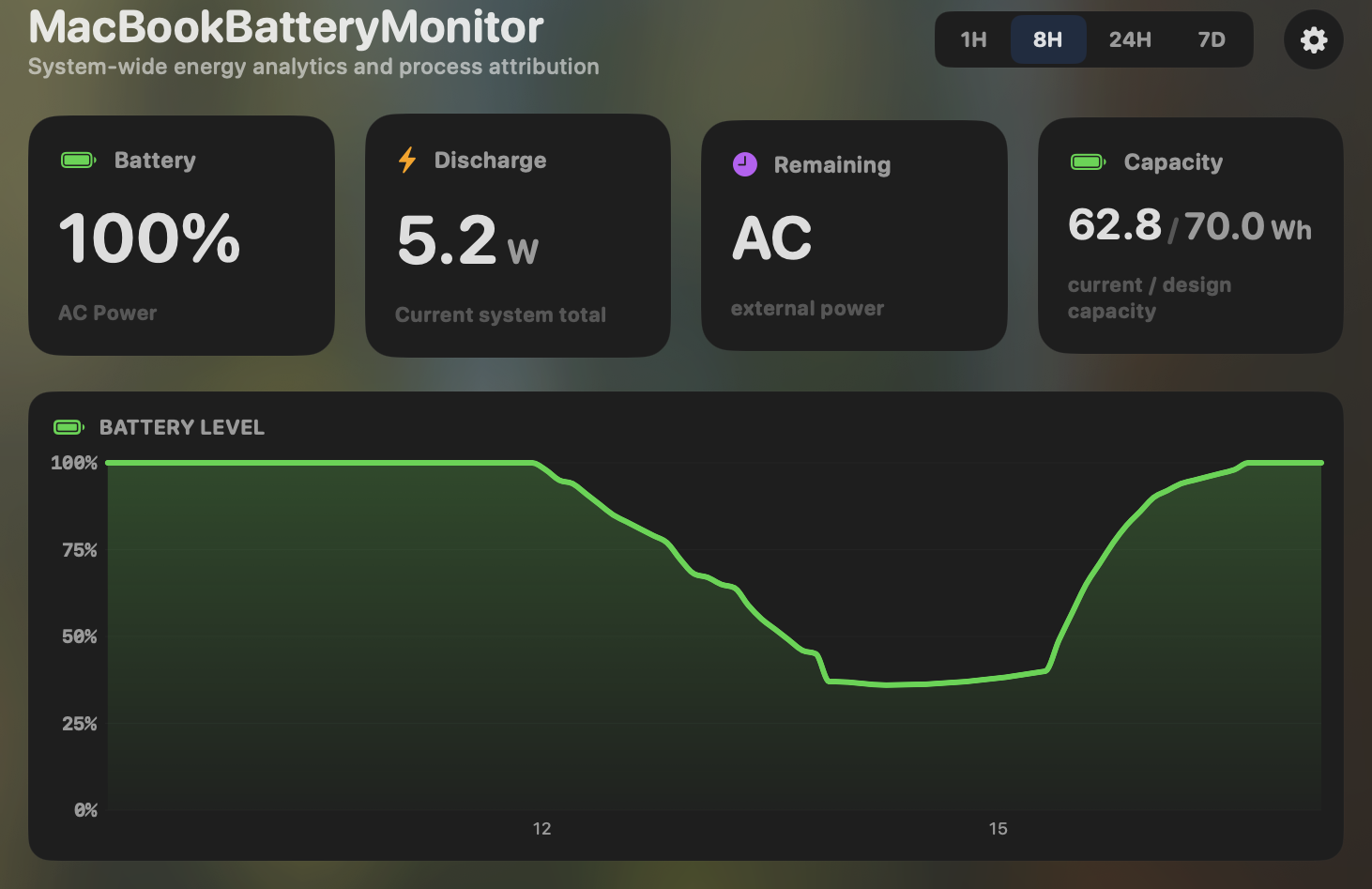
- Yes:Menu-bar first · Native, configurable icon
- Yes:History charts · 6h / 24h / 7d + per-app
Sensei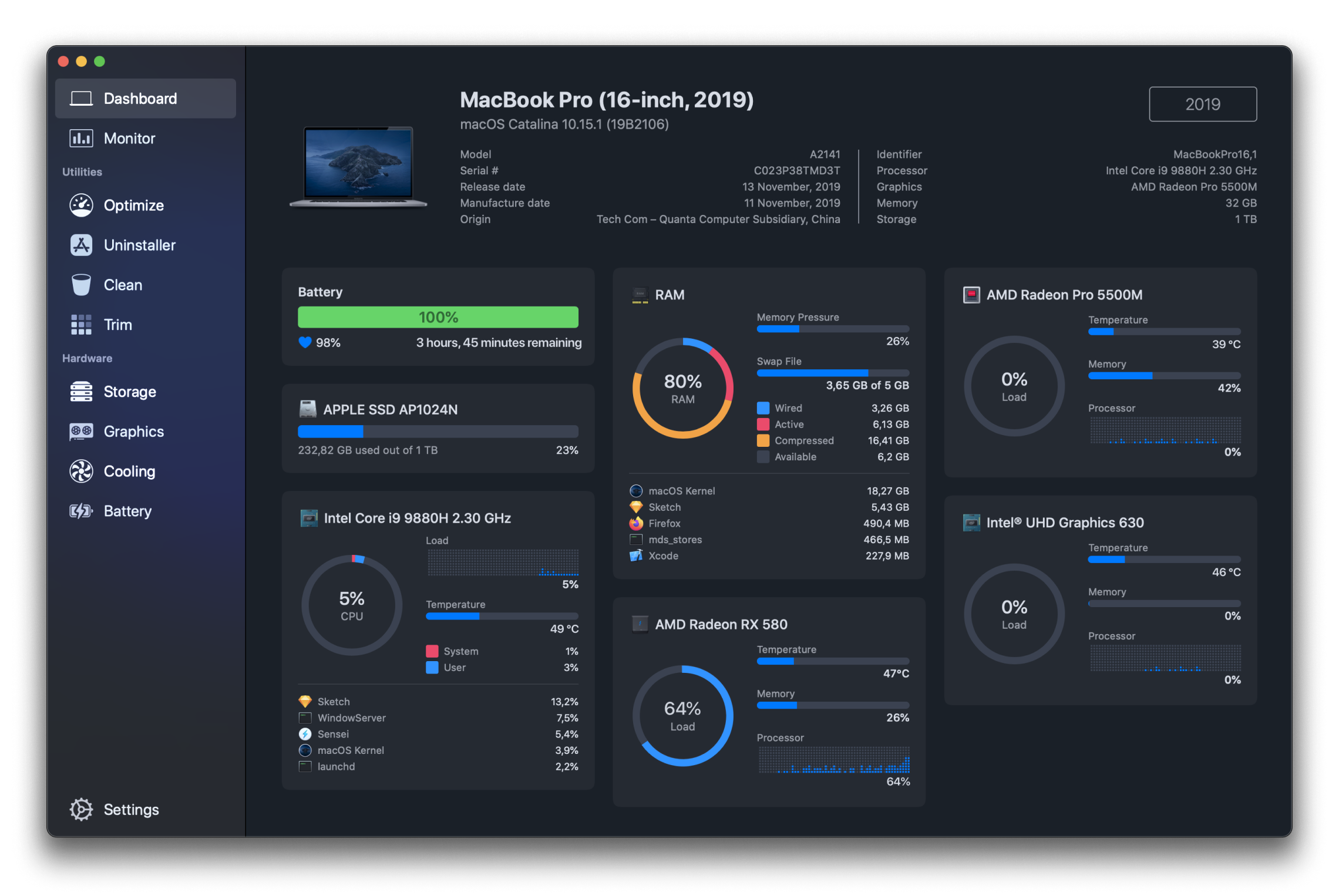
- Partial:Menu-bar first · Menu-bar widgets, window focus
- Partial:History charts · Limited battery history
Feature comparison
 MacBookBatteryMonitor
Why consider MacBookBatteryMonitor
See the drain, then do something about it
Sensei is a Mac maintenance suite with a battery panel. MacBookBatteryMonitor is the battery specialist: per-app watts, charge limit, Sailing Mode, and per-app controls, for a fraction of the price.
What Sensei does
Sensei, by Cindori, is a broad Mac performance, disk-health, and cleanup tool. Its battery module shows cycle count, current and design capacity, real-time status, and lifespan insights. The rest of the app does a lot more: SSD and disk S.M.A.R.T. health, a Trim Enabler, disk benchmarks, a full thermal and sensor dashboard, junk and cache cleanup, an uninstaller, a storage visualiser, and CPU and GPU benchmarks. The UI is widely praised. It runs on macOS 14 and up, Intel and Apple Silicon, and the pricing is $29 a year or $59 one-time for three Macs. On battery specifically it is read-only. It has no per-app power draw, no charge limiting, no Sailing Mode, no Low Power Mode automation, and no per-app actions. Battery is one panel inside a much larger optimizer.
What MacBookBatteryMonitor does
MacBookBatteryMonitor is a specialist. It shows real per-app power draw in watts, a component breakdown (CPU, GPU, RAM, display, USB), hidden drain from Docker, cloudflared, and launchd, and battery health and cycle count against the design limit. It adds the controls Sensei does not have: a 50% to 100% charge limit over SMC, Sailing Mode, automated Low Power Mode, and per-app actions including a CPU throttle, an E-core offload toggle, and a one-click kill. It does not do disk health, cleanup, benchmarks, or thermal monitoring beyond battery temperature. It is Apple-Silicon-only on macOS 14.6 and up.
Which one should you pick?
If you want one app that does disk health, cleanup, benchmarks, thermal monitoring, and a battery readout, Sensei covers more ground. If your actual problem is the battery, and you want real per-app watts and charge control rather than a static health panel, MacBookBatteryMonitor is the deeper tool. They are different categories that overlap on one panel.
Related guides
Frequently asked questions
Does Sensei show per-app power draw?
No. Sensei’s battery module is read-only, showing cycle count, capacity, and health status. It has no process-level power attribution and no charge control.
Can Sensei limit charging?
No. Sensei has no charge limiting, no Sailing Mode, and no Low Power Mode automation. It reads battery stats only.
Why is MacBookBatteryMonitor cheaper than Sensei?
Because it does less overall. Sensei is a broad optimizer covering disk, cleanup, thermal, and benchmarks. MacBookBatteryMonitor is a battery specialist. Different scope, different price.
Sources
Feature and pricing claims on this page come from Sensei’s own documentation and Apple’s published guidance.